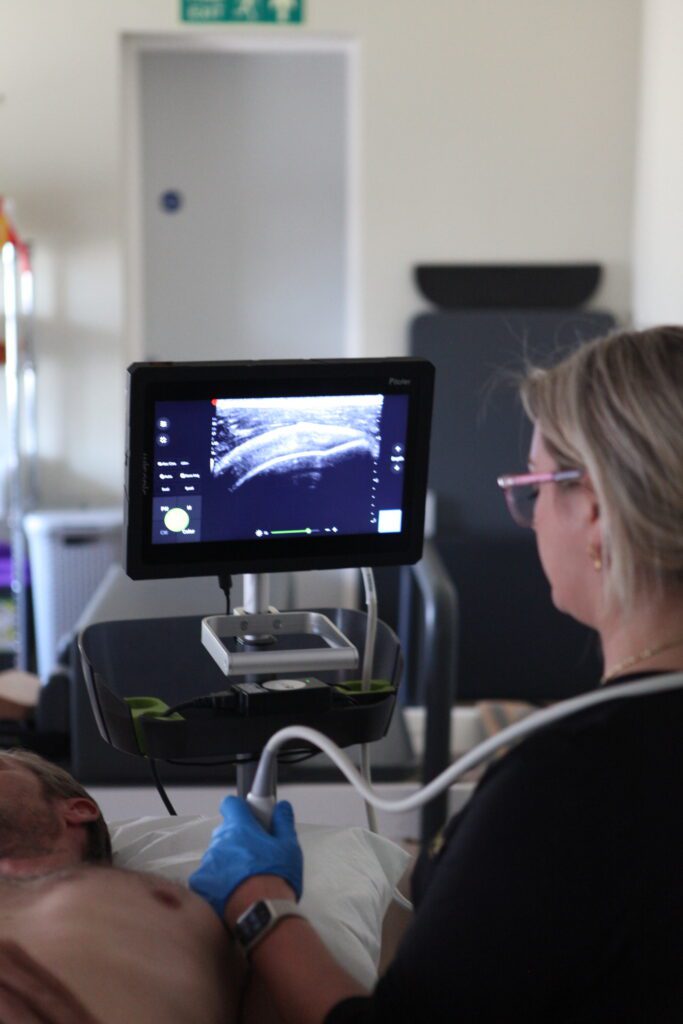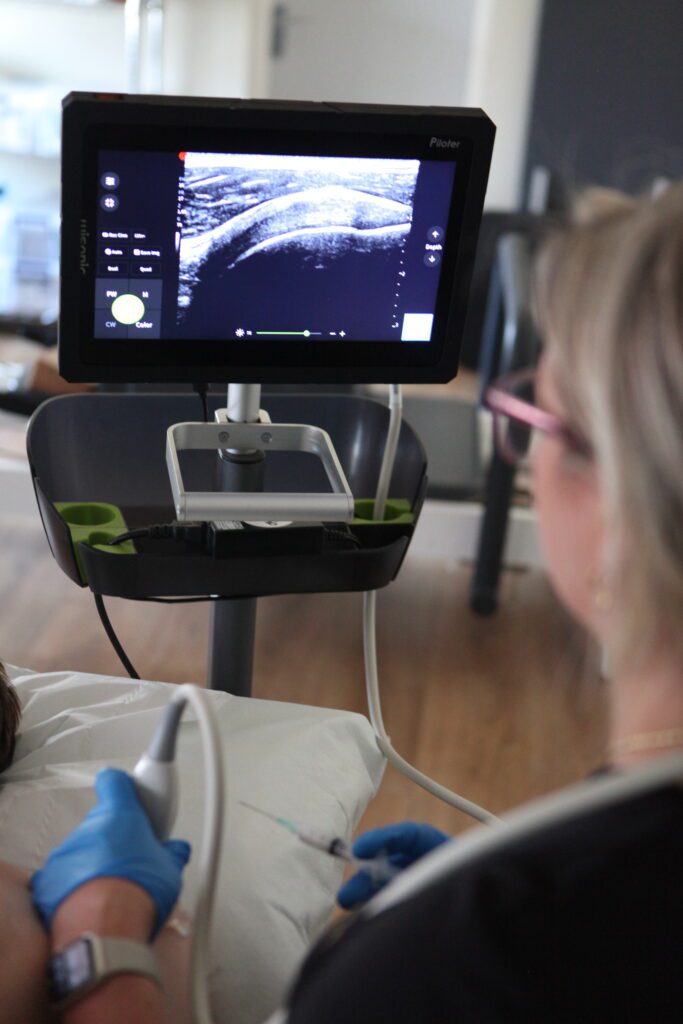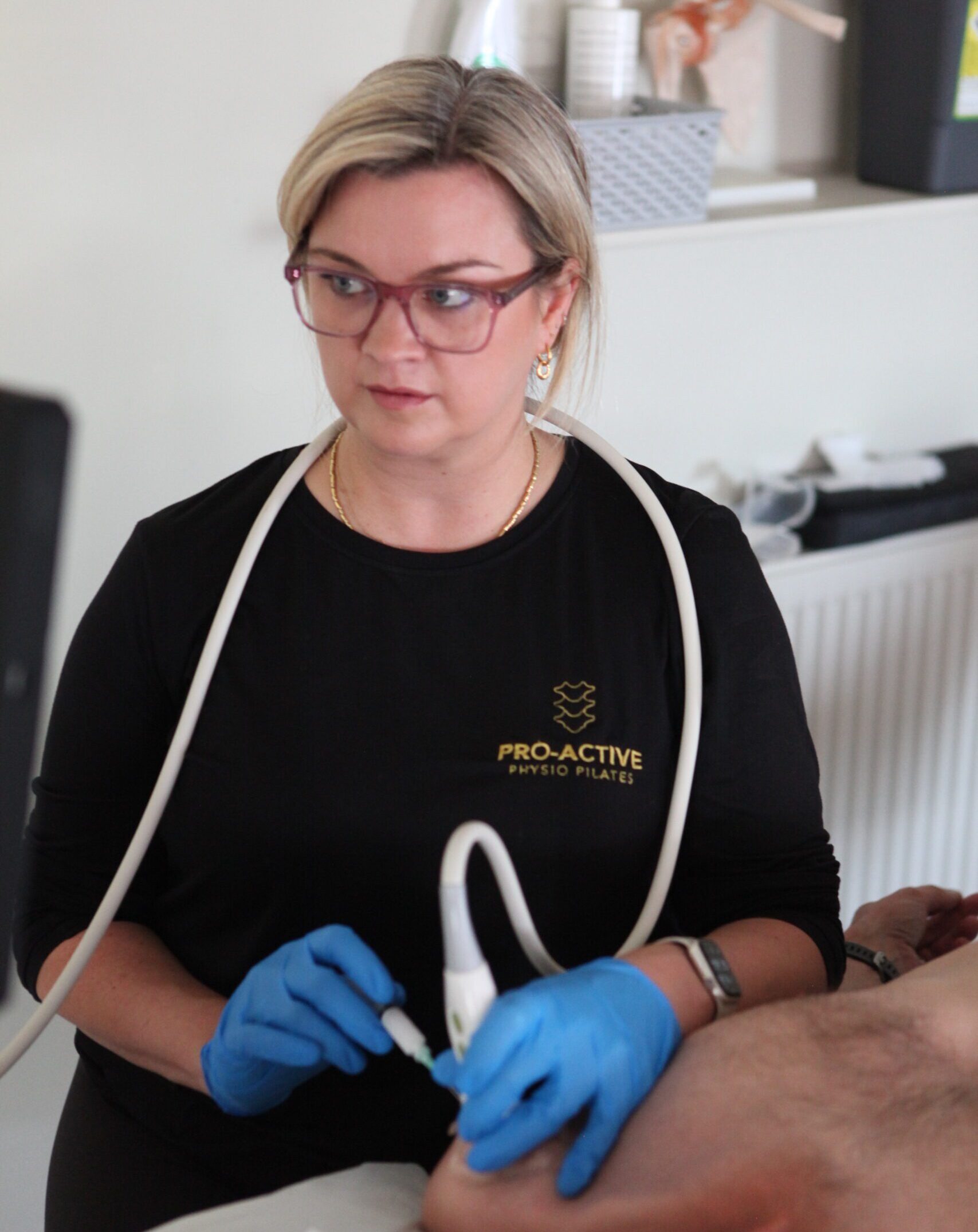
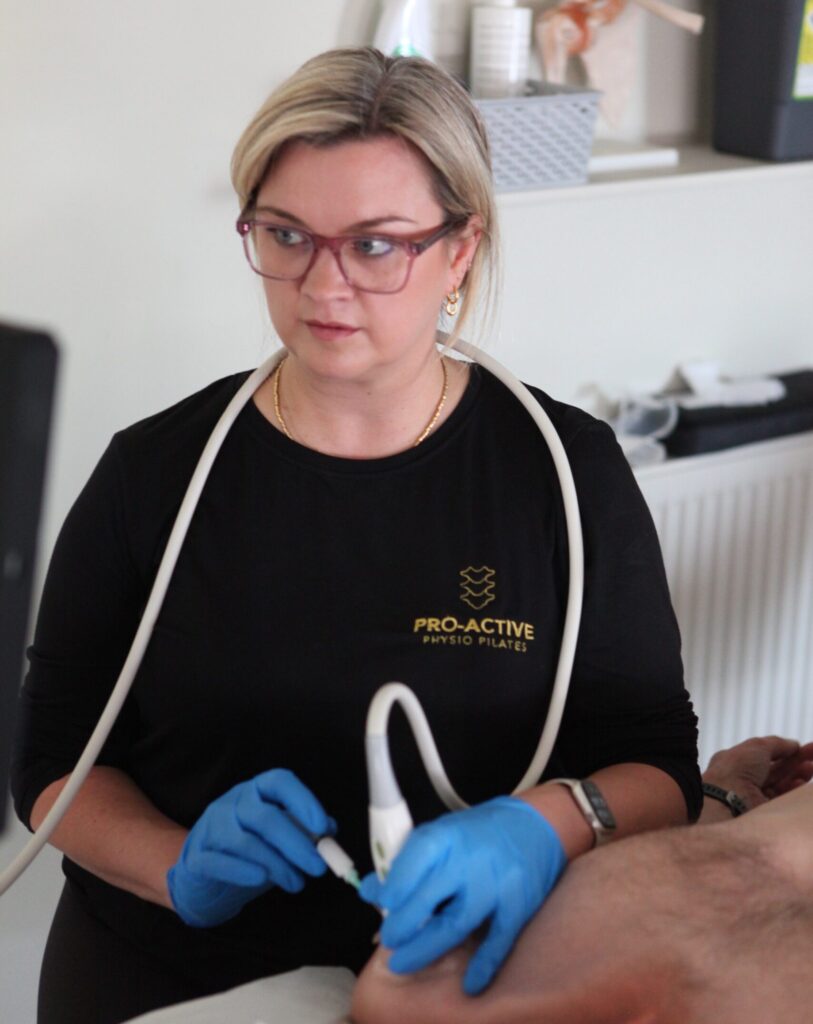
Injection therapy is carried out by our highly experienced physiotherapists, who are advanced clinical practitioners with extensive postgraduate training in musculoskeletal injection therapy.
All injections are performed under real-time ultrasound guidance as standard. This is considered the gold standard for musculoskeletal injections, whether using corticosteroid or hyaluronic acid (HA).
Research shows that ultrasound-guided injections provide greater accuracy, improved pain relief, and longer-lasting outcomes compared to traditional landmark-guided injections. Ultrasound guidance also reduces the risk of adverse events such as needle misplacement or tissue trauma, making treatment safer and more precise, particularly in complex or delicate anatomical areas.
Both Becka and Lucinda are experienced injectors and are qualified to perform corticosteroid and hyaluronic acid injections for both joints and soft tissue conditions.
Corticosteroid Injections
What Are Corticosteroid Injections?
Corticosteroids (commonly called steroid injections) are powerful anti-inflammatory medications used to reduce pain and inflammation within joints or soft tissues.
They are synthetic versions of hormones naturally produced by the adrenal glands. When injected directly into an irritated or inflamed area, corticosteroids can help reduce swelling, pain, and stiffness.
Steroid injections are often combined with a local anaesthetic such as Lidocaine. This provides immediate short-term pain relief while the corticosteroid begins working over the following days.
We use steroids cautiously at Pro-Active, and we see them more as an adjunct to physio rather than a stand-alone treatment. They can work to assist with recovery when treatment is hindered by active inflammation causing treatment to be too painful, or we reach a plateau.
What Are Corticosteroid Injections Used For?
Joint Pain & Osteoarthritis
- Knee arthritis
- Shoulder arthritis
- Ankle arthritis
- Elbow arthritis
- Wrist arthritis
- Thumb and finger arthritis
- Toe and foot arthritis
Soft Tissue Conditions
- Tennis elbow
- Rotator cuff irritation
- Plantar fasciitis
- Bursitis
- Tendinopathies and soft tissue inflammation
Why Corticosteroid Injections Work
Corticosteroids work by reducing inflammation within the affected tissue. By calming the inflammatory response, they can significantly reduce pain and improve mobility. This makes rehabilitation and physiotherapy treatment easier.
Injecting the medication directly into the affected area allows for targeted treatment without exposing the whole body to the same level of medication as oral steroids.
Evidence & Performance
Corticosteroid injections are widely used in musculoskeletal medicine and can provide effective short to medium-term pain relief, particularly where inflammation is the primary driver of symptoms.
Many patients experience:
- Reduced pain
- Improved movement
- Improved ability to participate in rehabilitation and exercise
- Faster symptom settling during flare-ups
Benefits can vary depending on the condition being treated and the severity of symptoms.
Why Patients Choose Corticosteroid Injections
- Fast acting pain relief
- Effective reduction in inflammation
- Minimally invasive treatment option
- Can help avoid or delay more invasive procedures
- Useful in supporting rehabilitation and physiotherapy
- Performed under ultrasound guidance for maximum precision and safety
Who Cannot Have a Corticosteroid Injection?
Corticosteroid injections may not be appropriate if you:
- Have had a steroid injection within the last 6 weeks
- Have already received three steroid injections within 12 months
- Have previously had an allergic reaction to steroid medication
- Have an active infection
- Are currently taking antibiotics
- Are pregnant or breastfeeding
- Are taking high doses of oral steroids
- Have planned surgery within the next 6 weeks
- Have a joint replacement in the area being injected
- Have a history of tuberculosis (TB)
- Have a bleeding disorder
Risks & Side Effects
Possible side effects and risks include:
- Temporary pain or discomfort after injection
- Bruising at the injection site
- Facial flushing for 12–24 hours
- Small changes in skin pigmentation or local fat loss
- Temporary increase in blood sugar levels in diabetic patients
- Rare risk of infection
- Rare risk of tendon weakening or rupture in certain areas
- Possible medication adjustments if taking Warfarin
- Exceptionally rare allergic or anaphylactic reaction
Frequency
Frequency depends on the condition being treated and clinical judgement. In most cases:
- No more than 3 injections are recommended within a 12-month period
- A minimum interval of 6 weeks is usually required between injections
Corticosteroid Hydrodilatation for Frozen Shoulder Injection
What Is Hydrodilatation?
Hydrodilatation is an ultrasound-guided injection procedure used to treat frozen shoulder (adhesive capsulitis).
The procedure involves injecting sterile saline, local anaesthetic, and corticosteroid into the shoulder joint capsule to gently stretch the tightened capsule, reduce inflammation, and improve movement.
What Is Hydrodilatation Used To Treat?
- Frozen shoulder (adhesive capsulitis)
- Painful shoulder stiffness
- Restricted shoulder movement
Why Hydrodilatation Works
Frozen shoulder causes the shoulder capsule to become inflamed and tight. Hydrodilatation helps by:
- Stretching the capsule
- Reducing inflammation
- Improving mobility
- Decreasing pain
It is most effective when combined with rehabilitation and physiotherapy.
Evidence & Performance
Research shows hydrodilatation can improve:
- Shoulder movement
- Pain levels
- Function and daily activity
Many patients notice improvement within days to weeks following treatment.
Why Patients Choose Hydrodilatation
- Minimally invasive
- Performed under ultrasound guidance
- Can improve movement more quickly than exercise alone
- Supports rehabilitation and recovery
Hyaluronic Acid (HA) Injections
At our clinic, all hyaluronic acid injections are performed under real-time ultrasound guidance to ensure precise placement and maximise effectiveness.
Hyaluronic acid is a naturally occurring substance found within healthy joints and soft tissues. In osteoarthritis and some tendon conditions, the quality and quantity of this lubrication reduces over time.
HA injections help restore lubrication, reduce friction, improve shock absorption, and support smoother movement.
Research shows that high molecular weight and stabilised HA products can provide meaningful improvements in pain and function, particularly in mild to moderate osteoarthritis. Benefits commonly last between 6–12 months and sometimes longer.
We offer three premium ultrasound-guided hyaluronic acid options.
OSTENIL PLUS ®
What Is OSTENIL PLUS?
OSTENIL PLUS® is a high-quality stabilised hyaluronic acid injection containing 2.0% sodium hyaluronate with mannitol, which helps protect and stabilise the hyaluronic acid chains.
It is designed as a single-injection treatment for osteoarthritis and joint pain.
What Is OSTENIL PLUS Used To Treat?
- Knee osteoarthritis
- Hip osteoarthritis
- Shoulder osteoarthritis
- Thumb arthritis
- Small joint arthritis
- Mild to moderate osteoarthritis in most joints
Why OSTENIL PLUS Works
OSTENIL PLUS improves the quality and viscosity of joint fluid, helping to:
- Reduce friction within the joint
- Improve shock absorption
- Support smoother movement
- Reduce pain and stiffness
The addition of mannitol helps protect the hyaluronic acid from breakdown, improving durability and effectiveness.
Evidence & Performance
Clinical studies demonstrate meaningful improvements in:
- Joint pain
- Mobility
- Function
Many patients experience symptom relief within days, with benefits commonly lasting between 6–12 months depending on the severity of the osteoarthritis, and individual patient symptoms.
Why Patients Choose OSTENIL PLUS
- Single injection treatment
- Minimal downtime
- Excellent safety profile
- Well tolerated
- Cost-effective option
- Supports active rehabilitation and movement
Frequency
- Usually given as a single injection
- Repeat treatment may be considered every 6–12 months depending on symptoms and response
OSTENIL TENDON ®
What Is OSTENIL TENDON?
OSTENIL TENDON® is a specialised hyaluronic acid injection designed specifically for tendon sheath and soft tissue applications.
It contains 2.0% sodium hyaluronate with mannitol and is used to improve tendon gliding, reduce friction, and support tendon rehabilitation.
What Is OSTENIL TENDON Used To Treat?
- Achilles tendinopathy
- Plantar fasciitis
- Peroneal tendon irritation
- Supraspinatus tendon sheath irritation
- Tendon sheath inflammation
- Overuse tendon conditions
Why OSTENIL TENDON Works
OSTENIL TENDON improves lubrication around irritated tendons and tendon sheaths, helping to:
- Reduce mechanical friction
- Improve tendon movement
- Reduce pain and irritation
- Support rehabilitation and loading programmes
Ultrasound guidance is particularly important to ensure accurate placement into the tendon sheath.
Evidence & Performance
Clinical use across Europe has demonstrated strong safety and effectiveness in tendon-related conditions.
Research suggests HA can:
- Improve tendon sheath lubrication
- Improve mobility
- Reduce pain
- Restore healthier tendon mechanics
Why Patients Choose OSTENIL TENDON
- Useful where friction, thickening, or tendon catching is present
- Safer alternative to corticosteroid injection in some tendon areas
- Complements physiotherapy and rehabilitation programmes
- Precise ultrasound-guided placement improves accuracy and outcomes
Frequency
- Typically 1–2 injections
Usually spaced several weeks apart depending on symptoms and response
DUROLANE ®
What Is DUROLANE?
Durolane is a stabilised high molecular weight hyaluronic acid gel developed using NASHA® technology.
It is designed to remain in the joint longer than many traditional hyaluronic acid products and is primarily used for moderate knee osteoarthritis.
Because of its higher molecular weight, some patients may experience mild post-injection discomfort or temporary reduction in activity for 1–2 weeks, but symptom relief often lasts significantly longer.
What Is DUROLANE Used To Treat?
- Moderate osteoarthritis
- Large joint osteoarthritis
- Joint pain associated with cartilage wear and degeneration
Why DUROLANE Works
DUROLANE works by restoring lubrication and shock absorption within the joint.
Once injected, it helps:
- Improve joint lubrication
- Reduce friction between joint surfaces
- Absorb mechanical stress during movement
- Improve comfort and mobility
- Reduce osteoarthritis-related pain
Its stabilised formulation allows the product to remain active within the joint for an extended period.
Evidence & Performance
Clinical studies and systematic reviews demonstrate:
- Sustained pain relief following a single injection
- Improved joint function and mobility
- Low rates of adverse effects
- Longer intra-articular duration compared with many alternative HA products
Research suggests benefits may last significantly longer than standard hyaluronic acid injections in appropriate patients.
Why Patients Choose DUROLANE
- Long-lasting symptom relief
- Single injection convenience
- Ideal for active individuals
- Can help delay surgery
- Suitable for patients wanting fewer treatment appointments
Frequency
- Typically administered as a single injection
- Repeat treatment may be considered between 6–18 months depending on symptom return and clinical assessment
Where Can I Receive Injection Therapy?
We provide ultrasound-guided injection therapy from our clinic in Overbury.
We welcome patients from:
- Tewkesbury
- Cheltenham
- Pershore
- Worcester
- Evesham
- And surrounding areas across Worcestershire and Gloucestershire