

Wimbledon season always brings world‑class tennis, dramatic storylines, and inevitably injuries. This year has been no exception, with several high‑profile players withdrawing or struggling due to musculoskeletal issues. For recreational players inspired to get back on court, it’s a timely reminder that tennis places significant demands on the body, and injury prevention is essential.
Below is our Pro-Active breakdown of current injury trends, famous cases, evidence‑based prevention strategies, and how our physiotherapy and Pilates team can help keep you playing pain‑free.
Current High‑Profile Wimbledon Injuries
Several big names have faced setbacks this season:
- Serena Williams – Knee Injury Serena sustained a right knee injury during her singles match, leading to withdrawal from doubles with Venus. Reports describe severe swelling and she was excused from media duties by WTA medical staff.
- WTA Injury Withdrawals Ahead of Wimbledon Victoria Mboko and Hailey Baptiste withdrew from the tournament, while Amanda Anisimova, Anastasia Potapova, Belinda Bencic, Marta Kostyuk and Mirra Andreeva were listed with injuries leading into Wimbledon.
- Other Retirements Multiple ATP and WTA players retired mid‑match due to injury, including Hubert Hurkacz and Benjamin Bonzi.
These cases highlight how common musculoskeletal injuries are at elite level – particularly knee, quad, shoulder, ankle and tendon injuries, which are consistently the most frequent on the WTA Tour.
Why Tennis Injuries Happen: Evidence from WTA Research
WTA injury surveillance shows:
- Lower limb injuries account for 51% of all cases.
- Muscle and tendon injuries make up 50%, especially in the thigh, shoulder/clavicle, ankle and knee.
- High match load strongly correlates with injury risk, especially during intense tournament periods like Wimbledon.
Grass courts like Wimbledon also influence injury patterns. They are faster, lower‑bounce surfaces that demand explosive movement, rapid directional change, and increased loading through the lower limb.
Injury Prevention: WTA & NICE‑Aligned Guidance
Our prevention advice follows both WTA medical guidelines and NICE musculoskeletal recommendations, ensuring safe, evidence‑based practice.
1. Load Management (WTA Guidance)
- Avoid sudden spikes in training volume.
- Balance match play with recovery days.
- Use structured warm‑ups and cool‑downs to reduce muscle/tendon strain.
2. Strength & Conditioning (NICE MSK Guidance)
NICE emphasises strengthening for joint stability, tendon health, and injury prevention across MSK conditions. Key areas for tennis players:
- Calf and Achilles loading for explosive movement.
- Quadriceps and hamstring strength for knee control.
- Rotator cuff and scapular stability for serving and overhead shots.
- Core and hip strength for balance, rotation and power.
3. Surface‑Specific Preparation
Grass courts require:
- Faster reaction times
- Lower centre of gravity
- Strong ankle stability
- Good proprioception These reduce slips, ankle sprains and knee overload.
4. Early Management of Pain (NICE MSK Guidance)
NICE recommends early assessment for persistent pain, especially when it affects daily function or sport.
How Pro Active Physio & Pilates Tewkesbury Can Help
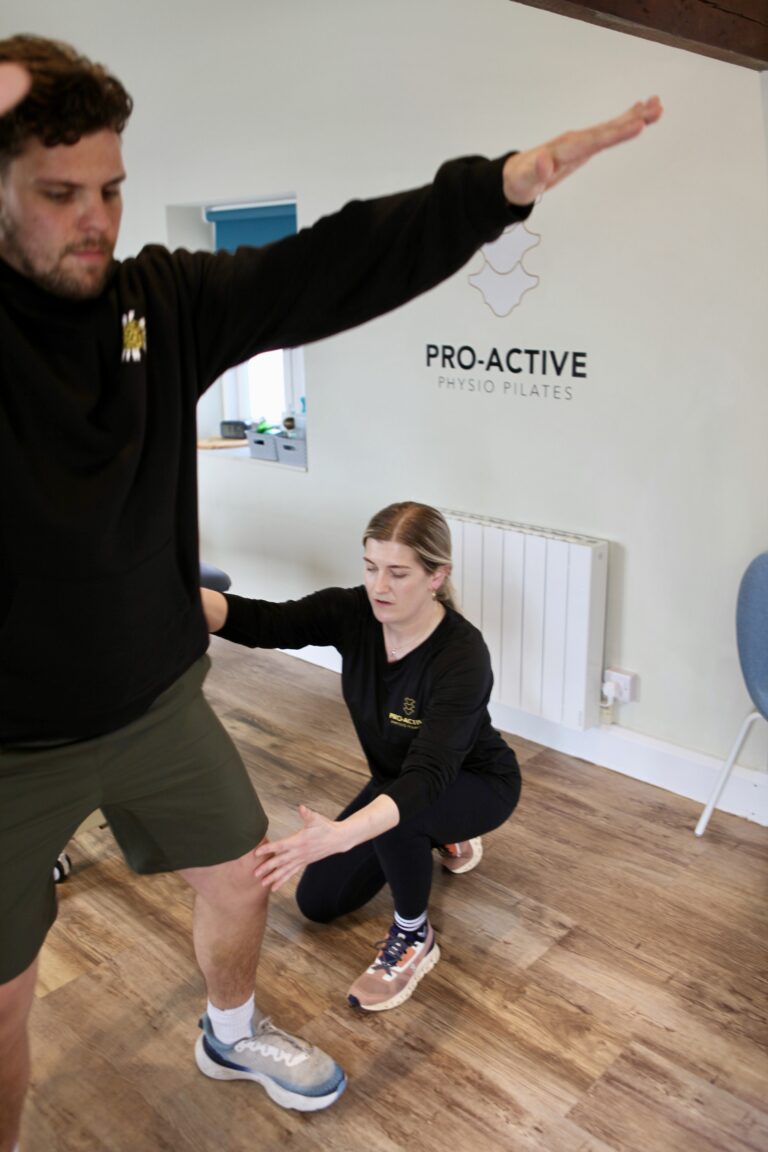
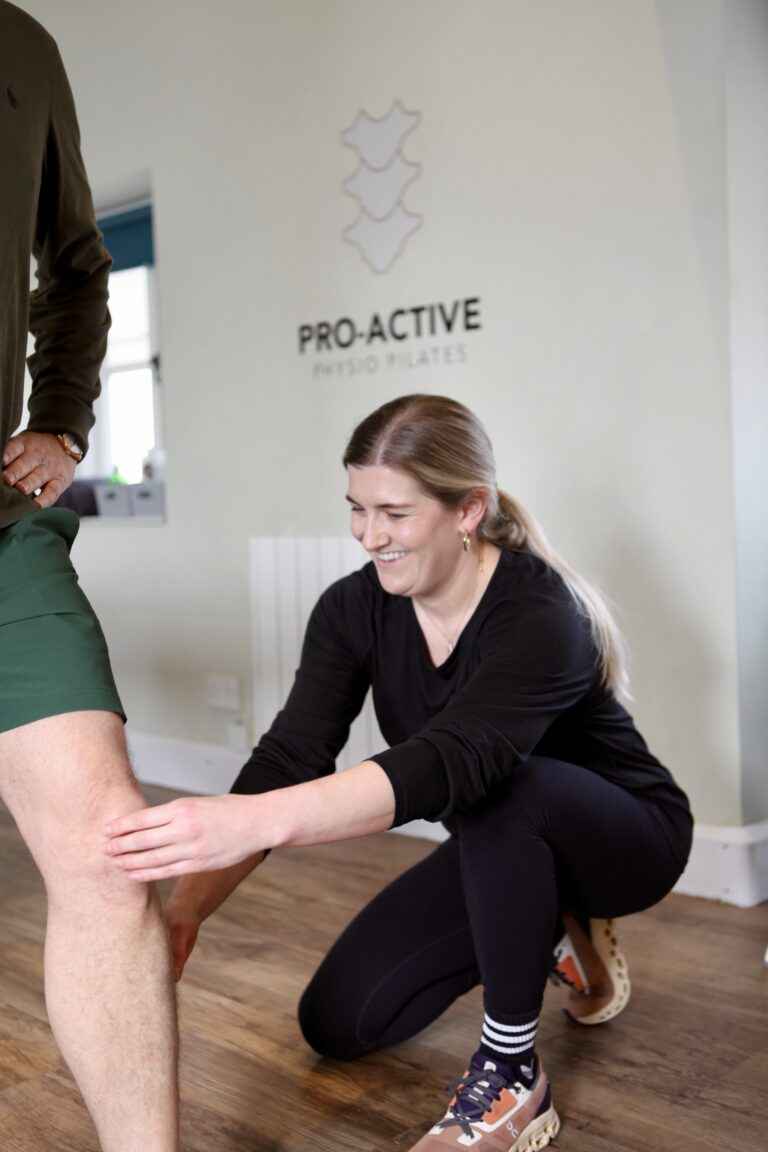
Our clinicians specialise in sports injuries and rehabilitation and are all experienced sports players themselves. Here’s how we support players during Wimbledon season and beyond:
1. Expert MSK Assessment
We identify early signs of overload- tendon irritation, joint stiffness, muscle imbalance – before they become injuries.
2. Tennis‑Specific Strength & Conditioning
We build programmes targeting:
- Lower limb power and stability
- Shoulder endurance for serving
- Tendon‑friendly loading (eccentric & isometric)
- Agility and change‑of‑direction drills
3. Shockwave Therapy for Tendinopathy
NICE supports shockwave for certain chronic tendon conditions, including greater trochanteric pain syndrome, achilles tendinopathy and plantar fasciitis. We use it alongside months of progressive loading for optimal results.
4. Pilates for Control & Longevity
Pilates enhances:
- Core stability
- Hip control
- Balance and proprioception All essential for reducing injury risk on grass courts.
5. Return‑to‑Play Pathways
Following NICE and WTA principles, we guide players through:
- Gradual load progression
- Surface‑specific drills
- Functional testing before full return to competition
Final Thoughts
Wimbledon inspires players of all ages to pick up a racquet – but it also highlights how demanding tennis can be on the body. With evidence‑based injury prevention, considered load management, and our professional support, you can enjoy the season safely and perform at your best.
If you’re experiencing pain, recovering from injury, or want a tennis‑specific conditioning plan to prevent injury our Pro Active team in Tewkesbury and Overbury is here to help. (Not far from the M5, Ashchurch Train Station, Evesham, Cheltenham North or Worcester).
Book your appointment today.



Comments
ExoWatts
Great content! Keep up the good work!
Lucinda Davies
Thankyou!