
Perimenopause is a time of significant hormonal change. Many women suddenly feel different in their bodies and in their ability to exercise. They may feel less strong, more fatigued, more injury‑prone or notice bladder symptoms for the first time.
The encouraging news is that strength and conditioning, combined with supportive nutrition and pelvic health awareness, is one of the most effective ways to stay strong, confident and injury‑resilient during this transition. This is consistently highlighted in guidance from POGP, NICE, CSP, The Menopause Movement and the Royal Osteoporosis Society.
How Perimenopause Changes Your Body
Oestrogen plays a key role in maintaining bone density, tendon health, muscle mass and pelvic floor function. As levels fluctuate and decline, several changes can occur.
Bone Density
Oestrogen helps regulate bone turnover. When levels fall, bone resorption increases, which can gradually reduce bone density. This is why perimenopause is a crucial time to build and maintain strong bones through resistance training and appropriate impact‑based exercise.
Tendon and Muscle Health
Tendons become less tolerant to sudden increases in load, and muscle mass naturally declines more quickly. This can make familiar activities such as running, gym classes, lifting or even long walks feel unexpectedly harder. Research shows women in midlife are more susceptible to tendinopathy and stress‑related injuries if training loads are not well managed.
Pelvic Floor and Bladder Control
Many women experience bladder leakage, urgency or increased frequency during perimenopause. Oestrogen changes affect the pelvic floor muscles, connective tissues and bladder sensitivity. These symptoms are extremely common, but they are also highly treatable with the right support.
Bladder Weakness: A Common but Treatable Symptom
Bladder leakage during exercise, coughing, sneezing or lifting can feel worrying, but it is not something you have to accept as normal.
During perimenopause, the pelvic floor may not respond as efficiently as it once did, and the tissues supporting the bladder and urethra can become less elastic. This can lead to stress incontinence, urgency or a feeling of heaviness.
A tailored combination of pelvic floor rehabilitation, deep abdominal strengthening, breath coordination and whole‑body conditioning can significantly improve bladder control. Many women find that once their pelvic floor is supported and their overall strength improves, they can return to running, lifting or high‑impact exercise with confidence.
Why Strength and Conditioning Is Essential
Strength training is one of the most powerful tools for women in midlife. It helps build and maintain muscle mass, improve tendon resilience, support joint stability and increase bone density. It also enhances balance, reduces falls risk and supports pelvic floor function. Many women also notice improvements in energy, mood and metabolic health.
The CSP and POGP recommend progressive strength training at least twice per week for all women in perimenopause and beyond.
Understanding Injury Risk in Perimenopause
With lower oestrogen, tissues become more sensitive to sudden spikes in training load. This is why women often develop injuries such as Achilles or gluteal tendinopathy, rotator cuff pain, plantar fasciopathy or stress fractures in the foot, shin or hip.
These injuries are not caused by doing the wrong exercise. They are usually caused by doing the right exercise at the wrong intensity or progressing too quickly.
How to Train Safely: Load Management Matters
A safe and effective training plan during perimenopause focuses on gradual progression. Increasing weights, reps, running distance or class intensity by around 5 to 10 percent at a time allows tendons and bones to adapt without becoming overloaded.
Rest days are essential. Tendons and bones adapt slowly, and recovery is a key part of building strength. Many women also benefit from alternating strength days with Pilates, mobility work or low‑impact conditioning.
Listening to your body is crucial. Morning stiffness, deep aching or pain that lingers into the next day are early signs that tissues need more time or a slight reduction in load.
Nutrition for Strength, Bone Health and Hormonal Support
Nutrition plays a major role in supporting training and tissue health during perimenopause. Women often need more protein to support muscle repair and growth, along with adequate calcium and vitamin D for bone health. Healthy fats support hormone production, and sufficient overall energy intake prevents under‑fuelled training.
Under‑fuelling is one of the biggest contributors to stress fractures and tendon pain in midlife women. Eating enough, and eating regularly, is essential for safe and effective training.
How We Support Women at Pro Active Physio and Pilates
Women choose our clinics because we offer a combined approach that supports the whole person, not just the symptoms.
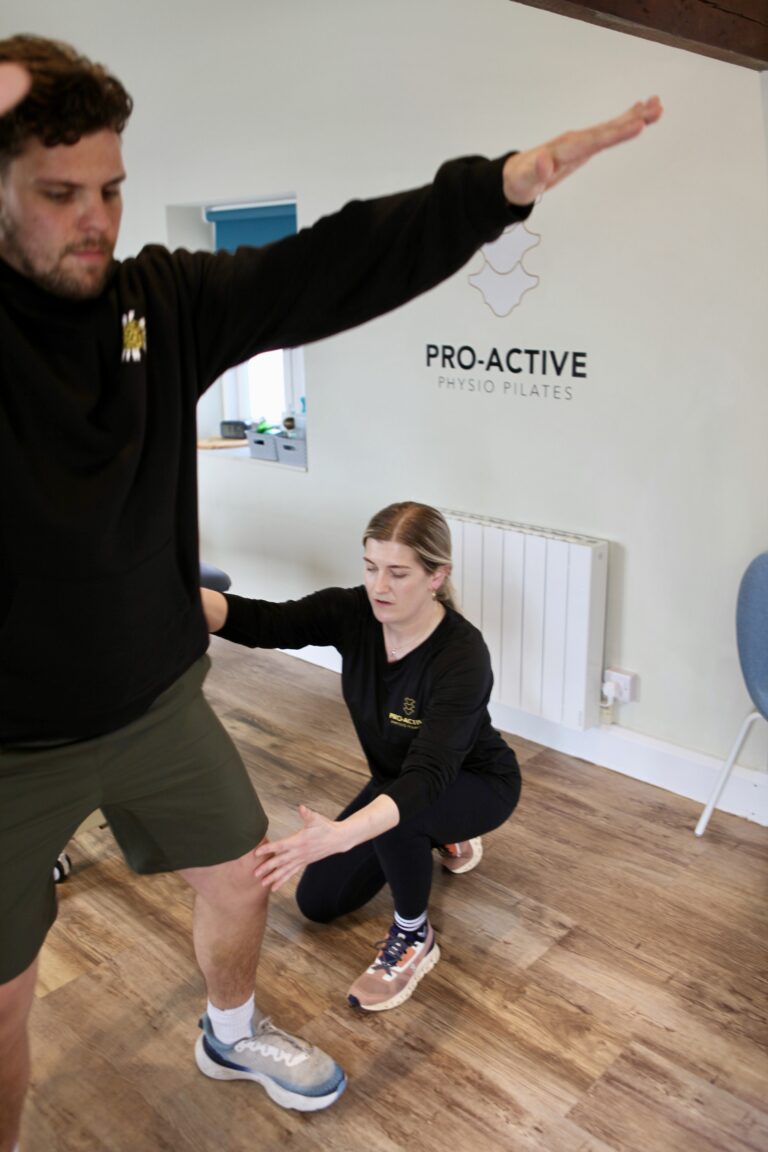
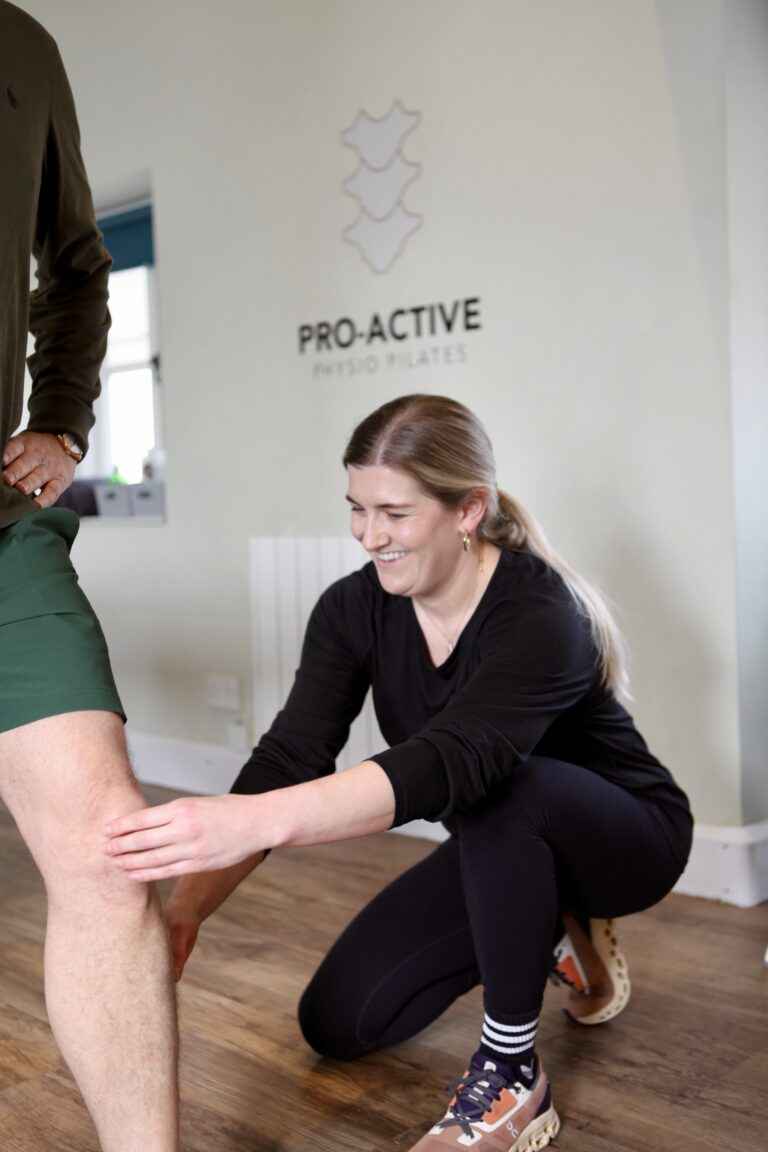
Our team provides specialist women’s health physiotherapy, tailored strength and conditioning programmes, pelvic floor assessment and rehabilitation and guidance on safe return to running, gym training or impact exercise. We also support women experiencing bladder symptoms, pelvic heaviness and perimenopause‑related changes.
Our Clinical Pilates sessions, available as 1 to 1 appointments or small groups, are ideal for women in perimenopause. Pilates helps improve core strength, pelvic floor support, mobility, balance and whole‑body control. It is an excellent complement to strength training and a supportive way to build confidence in movement.
Book Your Women’s Health Physio or Clinical Pilates Appointment
If you are noticing changes in strength, bladder control, recovery or injury patterns during perimenopause, you are not alone. You do not have to navigate this without support.
Our women’s health physiotherapists and Pilates instructors can help you build strength safely, support your pelvic floor, protect your bone density, reduce injury risk and train with confidence.
Book your Women’s Health appointment or Clinical Pilates session today and take the first step towards feeling stronger, more supported and more resilient through perimenopause and beyond.